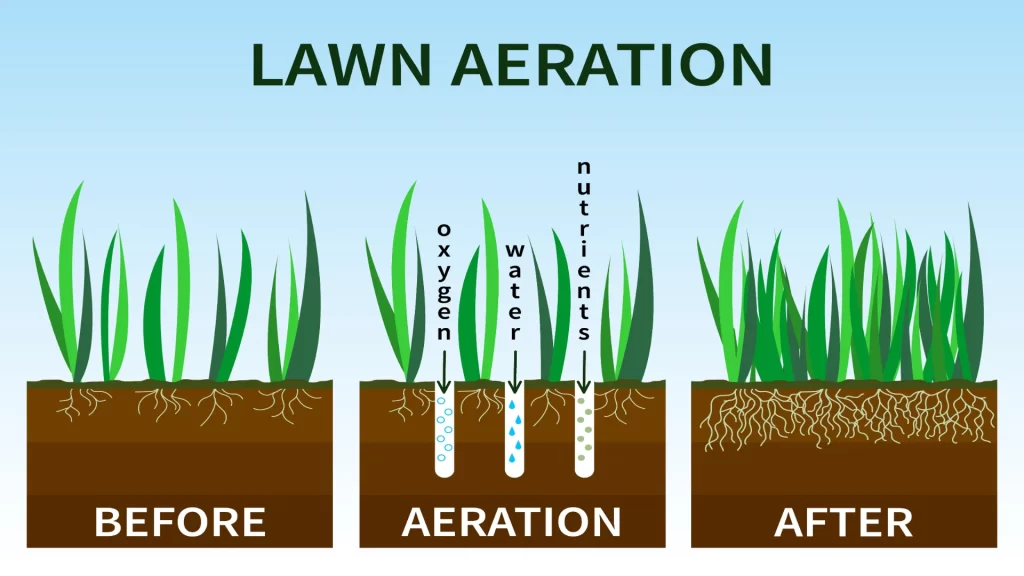
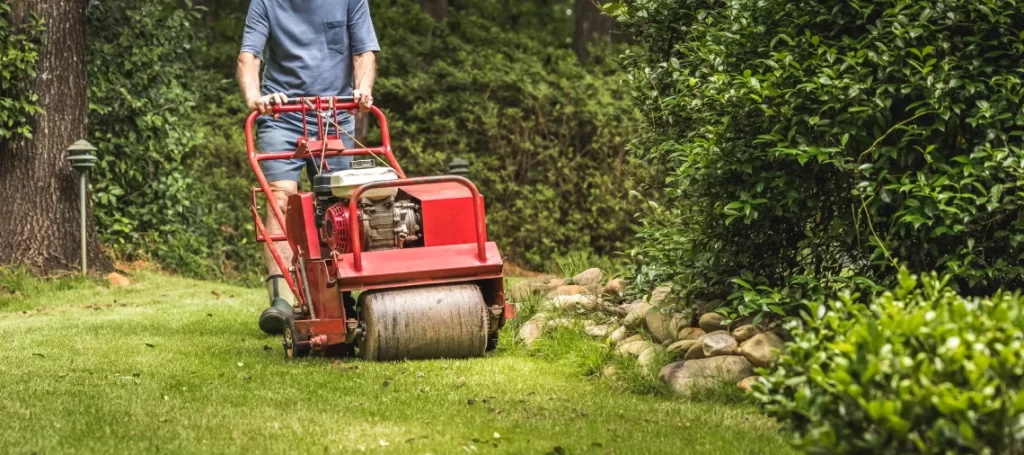
Yes, aerating a lawn can certainly help save water and prevent runoff, particularly in compacted soil. By poking tiny holes in your lawn, aeration helps improve the way water and nutrients flow into the soil, promotes deeper root growth and can prevent water from pooling or running off. It may seem too easy, but it packs a wallop of beneficial effects for your lawn.
Table of Contents
How Aeration Helps Conserve Water
Improves Water Absorption Soil becomes compact when a sense of density and hardness develops. That creates an impervious surface so that water can’t easily penetrate. Lawn aeration provides pores in the ground, allowing water to soak in instead of just sitting on the surface or evaporating.
Boosts Drought Resistance Grass roots grow deeper in looser soil. When your grass has longer roots, it can tap into more water below the surface. This means you don’t have to water as often, even during dry spells.
Enhances Moisture Retention Healthier soil retains more water. After aeration, you have better soil structure, which means more moisture remains in the root zone. Your grass stays green longer between watering.
How Aeration Helps Prevent Runoff
Relieves Soil Compaction Foot traffic, mowers and rain can all cause soil to compress. When that occurs, water may run off instead of soaking in. Aerating loosens the compacted soil so moisture can penetrate properly.
Reduces Erosion When water is absorbed rather than running off, there is less erosion. This is particularly helpful on elevated sites where runoff can wash soil away.
Breaks Down Thatch A dense layer of thatch acts as a barrier between the soil and the grass, preventing roots from getting water. Aeration opens up this layer to allow water to reach where it needs to.
A Simple Way to a Greener Lawn
One of the best things you can do to improve your lawn’s health is to aerate it. Whether you’re dealing with dry spots or runoff problems, aeration can be a big help.
Contact Proscape Property Maintenance today to get this season’s work on your schedule for professional lawn aeration and allow your landscape to flourish.