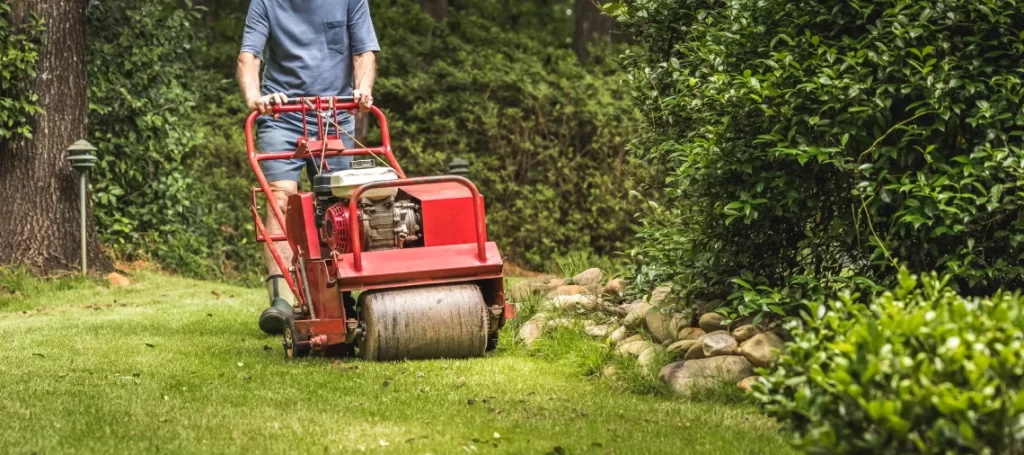
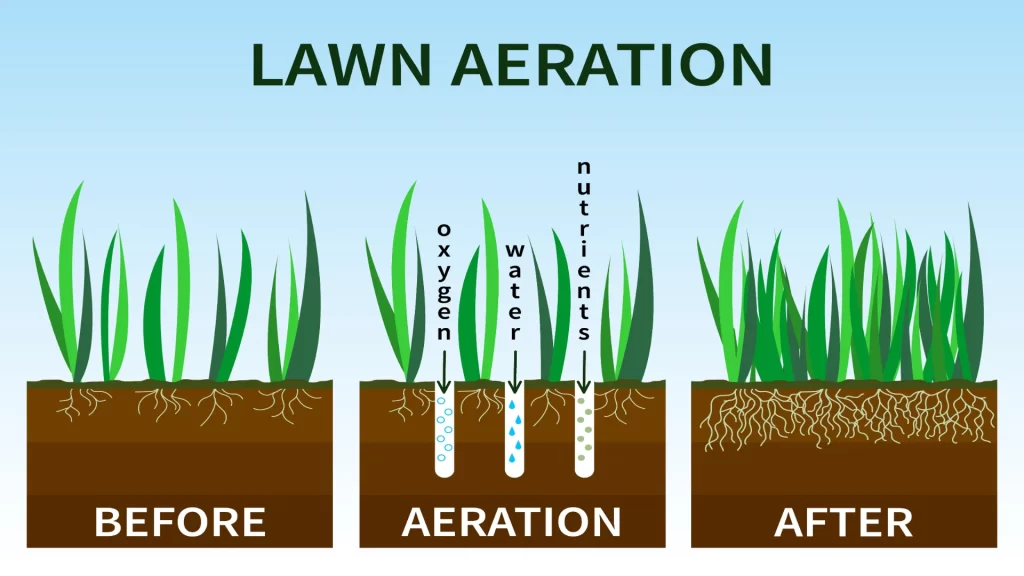
If your lawn has areas of standing water, soggy patches, or poor drainage, lawn aeration may be the solution — especially if compacted soil is the cause. Aeration works by loosening dense soil and creating space for water, nutrients, and air to reach your lawn’s roots. While it’s highly effective in the right situations, it’s not a cure-all. Knowing when aeration helps and when it doesn’t is key to solving your lawn’s drainage problems.
Foot traffic, heavy equipment, and clay-heavy soils can lead to dense, compacted ground. This blocks water from penetrating the surface. Aeration creates openings that allow water to flow into the root zone, improving soil structure.
When soil is too hard, water runs off instead of soaking in. Aeration helps reduce runoff, which means more moisture stays in the lawn where it’s needed — not wasted on the sidewalk.
A thick layer of thatch can prevent water from reaching the soil. Core aeration breaks through this barrier, helping water, air, and nutrients reach your grass roots more effectively.
Lawn aeration is most effective when your drainage issue is caused by:
Some drainage issues require more than aeration to resolve:
Apply compost or sand over the lawn right after aeration. These materials settle into the holes and continue improving soil drainage and structure.
If you’re seeing puddles, spongy soil, or stunted growth, compaction might be the cause — but rule out more serious issues first to avoid wasting time and effort.
Aeration is a powerful tool for improving your lawn’s health and water absorption — when used in the right situation. If you’re unsure what’s causing your drainage problem, Proscape Property Maintenance can help diagnose the issue and recommend the best course of action.
Call us today to schedule your aeration service or on-site evaluation.
Let's Get Started!
Request a Consultation
"*" indicates required fields